FIFA
Why a shootout is a preparation problem rather than a nerve problem
Deciding a tie from the penalty spot is routinely described as a lottery, yet almost every variable in it can be rehearsed, and the sides that rehearse them are not relying on luck.
What actually changes under pressure
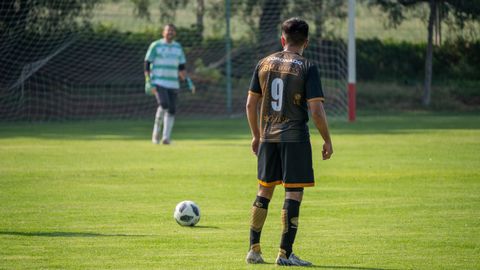
A penalty is a simple motor action that any professional can execute thousands of times without difficulty in an empty stadium. What changes in a shootout is not the difficulty of the action but the conditions surrounding it, including fatigue, crowd noise and consequence. Under those conditions a player relies more heavily on automatic execution and less on conscious control, which is why the practised kick survives.
Players who decide their placement in the moment are asking a stressed decision-making system to do work it is poorly suited to. The countermeasure is to fix the decision in advance so that only the execution remains to be performed.
Why the run-up matters more than the strike
The approach to the ball determines the angle of the hips and therefore the range of placements physically available at contact. A player who alters his run-up under pressure changes those constraints without intending to, and the strike deviates accordingly. That is why coaching focuses on making the approach identical every time rather than on the technique of the contact itself.
Goalkeepers watch the approach for exactly this reason, since it contains more information about the intended direction than the swing does. The contest is consequently decided in the final two steps, well before either player has done anything visibly decisive.
What the goalkeeper is actually doing
A keeper cannot react to a well-struck penalty after it has been hit, because the ball arrives faster than a full movement can be completed. He must therefore commit before or at contact, which makes the decision a prediction rather than a reaction. Predictions improve with information, so keepers study tendencies, watch the standing foot and note where players have placed kicks previously.
Delaying the dive as long as possible also has value, since it forces the taker to commit first and reveals less to him. Standing still is a legitimate strategy against a taker who waits for movement, and keepers use it selectively for that reason.
Order and selection as tactical decisions
The sequence of takers is chosen in advance, and the choices reflect which players are most reliable under the specific pressure of each position in the order. Kicks taken when a miss ends the tie are different in character from kicks taken while a cushion remains, even though the action is identical. Sides that assign those positions deliberately are managing a known asymmetry rather than hoping the order works out.
Selection during the match also matters, since a coach anticipating a shootout will keep confident takers on the field rather than withdrawing them. None of this guarantees an outcome, but it removes several ways of losing that have nothing to do with striking a ball.
Why the lottery framing persists
Shootouts produce a binary result from a small number of events, so outcomes vary considerably even between well-prepared sides. That variability is mistaken for randomness, when it is simply the consequence of deciding something important with very few repetitions. The preparation still shifts the distribution, and shifting a distribution is what preparation does in every other part of the sport.
Describing it as a lottery is comfortable for the losing side and unhelpful for anyone attempting to improve their position. The sides that treat it as a solvable problem are working on the parts that are genuinely within their control.
- The kick is a motor skill that degrades under unfamiliar conditions
- Goalkeeper research changes the odds without changing the technique
- Order and selection are decisions that can be made in advance