Basketball
The corner three is a spacing decision made by four other players
The most efficient shot from distance is available only when the rest of the floor has been arranged to make helping unaffordable, which is why it appears in some systems and never in others.
Why the corner is a valuable place to shoot
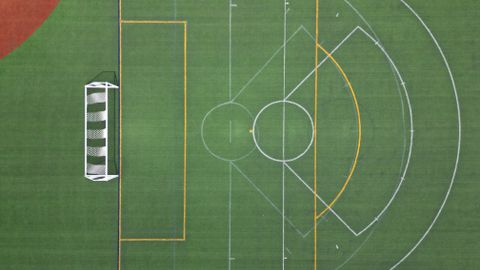
The distance to the basket from the corner is shorter than from other positions beyond the arc, because the line runs closer to the baseline there. A shorter shot is a more reliable one, so the same shooter converts at a better rate from the corner than from the top of the floor. The shot is also worth the same as any other from beyond the line, which makes the shorter distance a pure gain in value.
That combination is why offensive systems place shooters there deliberately rather than allowing them to drift wherever the play takes them. The position has no other advantages, since a player standing in the corner is poorly placed to rebound or to receive a drive.
The defender's impossible position
A defender guarding a corner shooter stands near the baseline, far from the paint where help is most often required. If he leaves to help, he must travel a long way back to contest a shot that will be taken as soon as the ball arrives. If he stays, the driving player faces one fewer obstacle at the basket, which is the most efficient place to score from.
Neither option is comfortable, and offences build actions specifically to force the choice as often as possible. The corner shooter is therefore useful even on possessions where he never touches the ball at all.
Why the pass is difficult to make
Reaching the corner requires a pass that travels across the defence rather than along it, which gives defenders time to intercept. The most common route is a kick-out from a player driving toward the basket, which requires the driver to see the shooter while under pressure. An alternative is to swing the ball around the perimeter, but each additional pass gives the defence time to recover its shape.
This is why corner attempts are strongly associated with penetration, and why teams that cannot drive rarely generate them. The shot is a consequence of pressure applied elsewhere rather than something an offence can create directly.
What the other four players are doing
Corner spacing only works if the remaining players occupy positions that keep their own defenders occupied and away from the paint. A teammate standing in an unhelpful position allows his defender to provide the help that the corner shooter was supposed to deter. Systems therefore assign specific positions to every player without the ball, and those assignments are as prescriptive as the action itself.
Players who drift, even by a couple of steps, can eliminate the advantage the arrangement was constructed to produce. This is the sense in which the corner shot is created collectively rather than by the shooter or the passer alone.
Why some teams abandon it
The corner offers no offensive rebound and leaves a player far from the defensive end when possession changes. Teams that prioritise rebounding or transition defence will therefore accept a slightly less efficient shot in exchange for better position. Shooters who are uncomfortable with the reduced margin along the sideline also lose value from the position rather than gaining it.
The decision is a genuine trade rather than an oversight, and different systems resolve it in different directions for defensible reasons. Judging an offence by how many corner attempts it takes therefore misses the reasoning behind how the floor was arranged.
- The corner shot is shorter but harder to create
- It exists because helping defenders must abandon it to cover the paint
- Spacing decisions by teammates determine whether it appears